
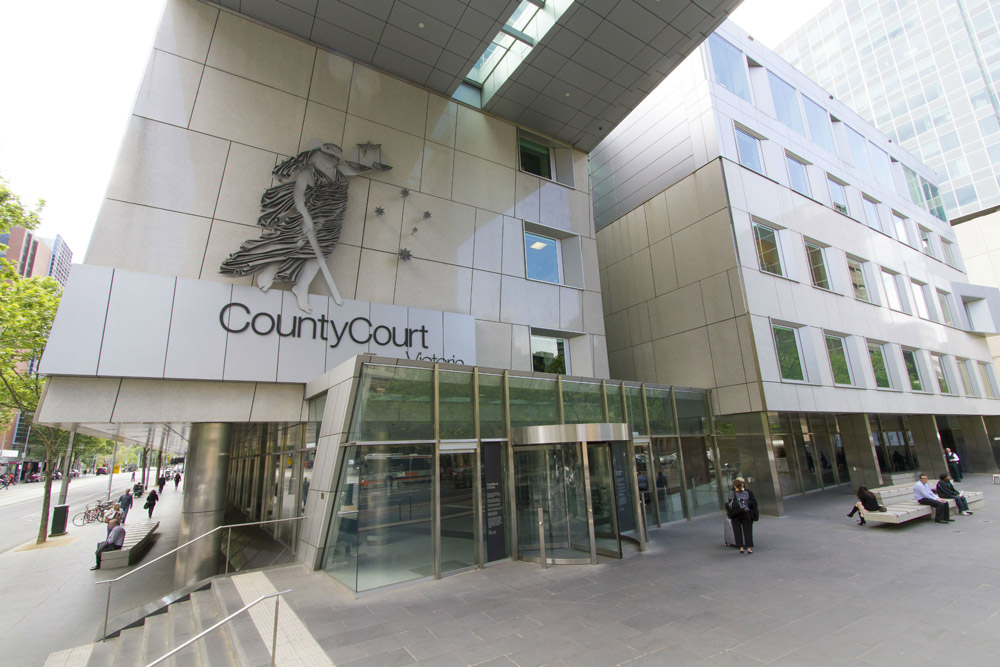
The County Court of Victoria is where serious indictable criminal matters are tried and sentenced. If your matter has been committed to the County Court, you are facing the most serious stage of the criminal justice system — and the way the case is prepared from the outset can shape its entire course. McMahon Criminal Defence Lawyers represents clients at every stage of County Court proceedings, from the committal process in the Magistrates’ Court through to trial, plea and sentence, on fixed fees.
On This Page
| Section | What it covers |
|---|---|
| What matters are heard here | The County Court’s criminal jurisdiction |
| The committal process (reformed 2025) | How indictable matters reach the County Court |
| The trial process | Indictment, arraignment, jury trial |
| Pleading guilty & sentencing | Plea hearings and the sentencing process |
| Appeals | Appealing to and from the County Court |
What Matters Are Heard in the County Court?
The County Court hears serious indictable offences, including:
- serious drug trafficking and cultivation offences;
- causing serious injury, and other serious offences against the person;
- rape, sexual assault and child sexual offences;
- armed robbery and aggravated burglary;
- serious fraud and financial crime; and
- appeals from the Magistrates’ Court.
The most serious offences of all — murder, and certain other offences — are reserved for the Supreme Court. Whether a matter stays in the Magistrates’ Court or proceeds to the County Court depends on the offence and, for some offences, on elections made by the accused or the prosecution.
The Committal Process (Reformed in 2025)
Before an indictable matter is tried in the County Court, it passes through a committal process in the Magistrates’ Court. This process was significantly reformed by the Justice Legislation Amendment (Committals) Act 2025, which commenced on 28 December 2025, and the position now differs depending on when a matter entered the system.
Under the reformed process, committal proceedings are managed according to the category a case falls into, and the magistrate no longer assesses whether the evidence is of sufficient weight to support a conviction before committing the matter. Importantly, a committal hearing may not be held in proceedings for a sexual offence, a family violence offence, or a stalking charge under section 21A(1) of the Crimes Act 1958, and for certain offences that must be committed to the Supreme Court. The practical effect is that the opportunity to cross-examine witnesses before trial is now more limited than it was under the former system.
Even so, the committal stage remains a critical strategic phase. It is where the prosecution evidence is disclosed through the hand-up brief, where applications can be made, where charges can be negotiated, reduced or resolved, and where the foundations of the defence are laid. Early, expert preparation at this stage can change the entire trajectory of a case — sometimes resolving it without a trial at all. Because the rules differ depending on whether the filing hearing occurred before or after 28 December 2025, current advice is essential.
The Trial Process
If a matter proceeds to trial, the Office of Public Prosecutions files an indictment — the formal document setting out the charges — and the case is managed through directions hearings in the County Court. At trial:
- the accused is arraigned — the charges are read and the accused pleads guilty or not guilty;
- a jury of twelve is empanelled (most serious criminal trials in the County Court are jury trials);
- the prosecution must prove each charge beyond reasonable doubt;
- the defence tests the prosecution case and may call evidence, though the accused never bears the burden of proving innocence; and
- the jury delivers its verdict.
A trial is a demanding process requiring meticulous preparation — analysis of the brief, forensic and expert evidence, witness preparation, and often the instruction of experienced counsel. We manage that preparation and work alongside trial counsel to give every client the strongest possible defence.
Pleading Guilty and Sentencing
Many County Court matters resolve as a plea of guilty rather than a trial — often after successful negotiation of the charges. At a plea hearing, the prosecution outlines the facts, and the defence makes a plea in mitigation, presenting the full picture of the offending and the offender, supported by material such as references, reports and evidence of rehabilitation. The judge then proceeds to sentence.
An early plea of guilty is an important mitigating factor and can substantially reduce the sentence imposed. Deciding whether and when to plead, and on what basis, is one of the most consequential decisions in a serious case — and one where experienced advice matters most. A well-prepared plea can be the difference between immediate imprisonment and a community-based outcome.
Appeals
The County Court hears appeals from the Magistrates’ Court, which are heard afresh (de novo). Appeals from the County Court itself — against conviction or sentence after a trial or plea — go to the Court of Appeal and require leave. Strict time limits apply, usually 28 days, so advice should be sought promptly after any adverse result.
How We Help
A County Court matter is serious, but it is also an opportunity — for charges to be reduced, for cases to be resolved favourably, and for the strongest possible result at trial or on a plea. We represent clients at every stage, and if you have been remanded, see our guide to bail. Contact us for a confidential discussion of your matter.
Frequently Asked Questions
What is the difference between the Magistrates’ Court and the County Court?
The Magistrates’ Court deals with summary offences and the early stages of serious (indictable) matters, including the committal process. The County Court hears serious indictable offences at trial and sentence, and also hears appeals from the Magistrates’ Court. The most serious offences, such as murder, are reserved for the Supreme Court.
How did the committal process change in 2025?
The Justice Legislation Amendment (Committals) Act 2025 commenced on 28 December 2025. Under the reformed process the magistrate no longer assesses the strength of the evidence before committing a matter, and a committal hearing may not be held for sexual offences, family violence offences or stalking charges. Which rules apply depends on when your filing hearing occurred.
Will I have a jury trial in the County Court?
Most serious criminal trials in the County Court are heard by a jury of twelve. The prosecution must prove each charge beyond reasonable doubt, and the jury delivers the verdict. Many matters, however, resolve as a plea of guilty rather than proceeding to a jury trial.
Does pleading guilty early reduce my sentence?
Yes. An early plea of guilty is an important mitigating factor and can substantially reduce the sentence imposed, as it indicates remorse and saves the time and cost of a trial. When and whether to plead, and on what basis, is a critical decision that should be made with experienced advice.
How long does a County Court case take?
It varies widely. The committal stage in the Magistrates’ Court can take several months, and a contested County Court trial can take from a few days to several weeks depending on complexity, with waiting time before the trial date. We give a realistic estimate based on the specifics of your matter.
Can I get bail while my County Court matter is pending?
Often, yes, though for many serious indictable offences a reverse-onus bail test applies, meaning you must show a compelling reason or exceptional circumstances. Bail in serious matters was made harder by the 2025 bail reforms. See our guide to bail for how the tests work.
Get Expert Legal Advice — Fixed Fees, No Surprises
McMahon Criminal Defence Lawyers is located directly opposite the Ballarat Magistrates Court. Call us today for a confidential consultation.
📞 Contact us now to discuss your matter
Get in Touch
Contact us today for a confidential consultation with an experienced criminal defence lawyer.