
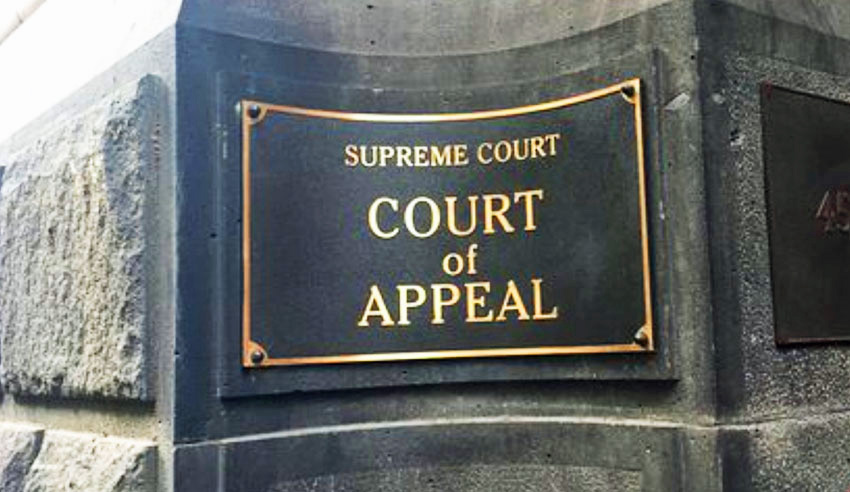
If you have been convicted or sentenced and believe the result was wrong, you may have a right of appeal — but the rules, the court and the time limits differ sharply depending on which court dealt with your matter. In every case the clock is short: you generally have just 28 days. McMahon Criminal Defence Lawyers advises on and conducts criminal appeals, appearing in the County Court, the Trial Division of the Supreme Court and the Court of Appeal. This page explains how appeals work in Victoria; it is general information, not advice about your matter. If you are thinking about an appeal, the most important thing you can do is get advice quickly, before the time limit expires.
On This Page
| Section | What it covers |
|---|---|
| Appeals from the Magistrates’ Court | De novo appeals to the County Court |
| Appeals from the County or Supreme Court | Appeals to the Court of Appeal after a trial |
| Time limits and extensions | The 28-day rule and applying out of time |
| Grounds of appeal | When a conviction or sentence can be challenged |
| Risks of appealing | Including the risk of a heavier sentence |
| Prosecution appeals | When the DPP can appeal |
Appeals from the Magistrates’ Court
If you were convicted or sentenced in the Magistrates’ Court, you have a right to appeal to the County Court under section 254 of the Criminal Procedure Act 2009. You can appeal against your conviction and sentence, or against sentence alone.
The defining feature of this appeal is that it is heard de novo — meaning “from new”. The County Court judge hears the matter entirely afresh, as though the Magistrates’ Court hearing had not happened. This has powerful practical consequences:
- you do not have to identify any specific error by the magistrate — you simply ask the higher court to reach its own decision;
- the judge is not bound by the magistrate’s findings or reasons; and
- you are generally not bound by how your case was run below, and in many cases not even by a guilty plea entered in the Magistrates’ Court.
This makes a County Court appeal one of the most valuable rights in summary criminal practice — a genuine second opportunity to achieve a better outcome. Note: the Victorian Government has foreshadowed reform that would change these appeals from a full rehearing to a review based on the transcript of the original hearing. That reform is not yet in force, but it is a reason to obtain current advice rather than relying on older information.
Appeals from the County or Supreme Court
Appeals after a trial on indictment — that is, from the County Court or the Trial Division of the Supreme Court — are very different. They are heard by the Court of Appeal, and they are not a rehearing. You must identify a specific, arguable error, and in almost all cases you need the court’s leave (permission) to appeal.
- Appeal against conviction — on a ground such as an error of law, a misdirection to the jury, or that the verdict is unreasonable or cannot be supported by the evidence.
- Appeal against sentence — on the ground that the sentence is manifestly excessive, or that the sentencing judge made a specific error.
A further appeal, by leave, lies to the High Court of Australia, but only in limited circumstances raising questions of general importance.
There is also a separate, more technical route: an appeal from the Magistrates’ Court to the Supreme Court on a question of law. Choosing this path means permanently giving up the right to a de novo County Court appeal, so it is only appropriate in particular cases and should never be embarked on without advice.
Time Limits and Extensions
For almost all criminal appeals in Victoria, the time limit is 28 days from the date of sentence, and it is strictly enforced. For a County Court appeal, the Notice of Appeal is filed with the Magistrates’ Court registry and must be served on the prosecution within 7 days of filing.
If the 28 days has passed, your rights are not necessarily lost, but you must apply for an extension of time (leave to appeal out of time). The court will generally require you to show an exceptional circumstance or good reason for the delay and that the prosecution’s case will not be prejudiced. These applications are uncertain, which is why acting within the original 28 days is so important.
If you were sentenced to imprisonment and wish to appeal, you can apply for bail pending appeal; filing an appeal does not by itself release you. See our guide to bail for how bail applications work. Note too that lodging an appeal does not automatically stay a licence disqualification — a separate application is required to keep driving pending the appeal.
Grounds of Appeal
Because a County Court appeal is heard de novo, you do not need a “ground” in the technical sense — you are simply asking for a fresh decision, and the appeal often focuses on putting forward a stronger sentencing case or re-running a contest with better evidence or preparation. For Court of Appeal matters, where a specific error must be shown, common grounds include:
- an error of law by the trial judge, including misdirection of the jury;
- a verdict that was unreasonable or unsupported by the evidence;
- a manifestly excessive sentence, or a specific error in the sentencing process; and
- fresh evidence not reasonably available at trial.
Not every disappointing result is appellable. We give an honest assessment of prospects before you commit to the cost and uncertainty of an appeal — sometimes the better advice is not to appeal.
The Risks of Appealing
Appealing is not risk-free, and this is something every person should understand before lodging. On a County Court appeal against sentence, the County Court can impose a sentence that is more severe than the one the magistrate imposed. When you lodge such an appeal you must sign an acknowledgement that you understand this. The Court of Appeal likewise has power to increase a sentence on a sentence appeal in appropriate cases. A clear-eyed assessment of the downside, not just the potential upside, is an essential part of the advice we give.
Prosecution Appeals
Appeal rights are not the accused’s alone. The Director of Public Prosecutions can appeal against a Magistrates’ Court sentence to the County Court where it is in the public interest, and against sentences imposed in the higher courts. Findings of guilt, by contrast, can generally only be appealed by the accused. If you have been notified that the prosecution is appealing your sentence, obtain advice immediately.
Getting Advice Quickly
The single most important thing about an appeal is the 28-day deadline. If you are even considering an appeal, speak to a lawyer well within that window so the option is preserved and the case properly prepared. We provide an honest assessment of prospects and risk, fixed-fee representation, and conduct appeals from the County Court through to the Court of Appeal. We can also advise whether, in your circumstances, a different sentencing outcome realistically remains achievable.
Frequently Asked Questions
How long do I have to appeal in Victoria?
In almost all cases, 28 days from the date you were sentenced. For a County Court appeal the Notice of Appeal is filed at the Magistrates’ Court registry and served on the prosecution within 7 days. If the 28 days has passed you must apply for an extension of time, which requires showing a good reason for the delay — so it is far better to act within the original period.
What is a de novo appeal?
A de novo appeal is the appeal from the Magistrates’ Court to the County Court. ‘De novo’ means ‘from new’: the County Court judge hears the matter entirely afresh and is not bound by the magistrate’s decision. You do not have to prove the magistrate made an error — you simply ask the higher court to reach its own decision, which makes it a genuine second chance at a better result.
Can my sentence be increased if I appeal?
Yes. On a County Court appeal against sentence, the County Court can impose a more severe sentence than the magistrate did, and you must sign an acknowledgement that you understand this risk when you lodge. The Court of Appeal can also increase a sentence in appropriate cases. This is why an honest assessment of the risks, not just the potential benefits, is essential before appealing.
Can I appeal if I pleaded guilty in the Magistrates’ Court?
Often, yes. Because the County Court appeal is heard de novo, you are generally not bound by a guilty plea entered in the Magistrates’ Court, and in appropriate cases the matter can be re-run. Whether this is the right course depends on your circumstances, and you should get specific advice.
What is the difference between a County Court appeal and a Court of Appeal case?
A County Court appeal (from the Magistrates’ Court) is a complete rehearing where no specific error need be shown. A Court of Appeal case (from the County or Supreme Court after a trial) is not a rehearing — you must identify a specific legal error and usually need the court’s leave to appeal. They are governed by different rules and have very different prospects.
Do I have to stay in custody while my appeal is heard?
Not necessarily. If you were sentenced to imprisonment, lodging an appeal does not by itself release you, but you can apply for bail pending appeal. Whether bail is granted depends on the circumstances of your case. We can make that application at the same time as lodging the appeal.
Is it worth appealing my case?
Not every disappointing result can or should be appealed. Appeals carry cost, uncertainty and, for sentence appeals, the risk of a worse outcome. We give an honest assessment of your prospects before you commit, and sometimes the right advice is that an appeal is not in your interests. The only way to know is to have the matter reviewed promptly, within the 28-day window.
Get Expert Legal Advice — Fixed Fees, No Surprises
McMahon Criminal Defence Lawyers is located directly opposite the Ballarat Magistrates Court. Call us today for a confidential consultation.
📞 Contact us now to discuss your matter
Get in Touch
Contact us today for a confidential consultation with an experienced criminal defence lawyer.